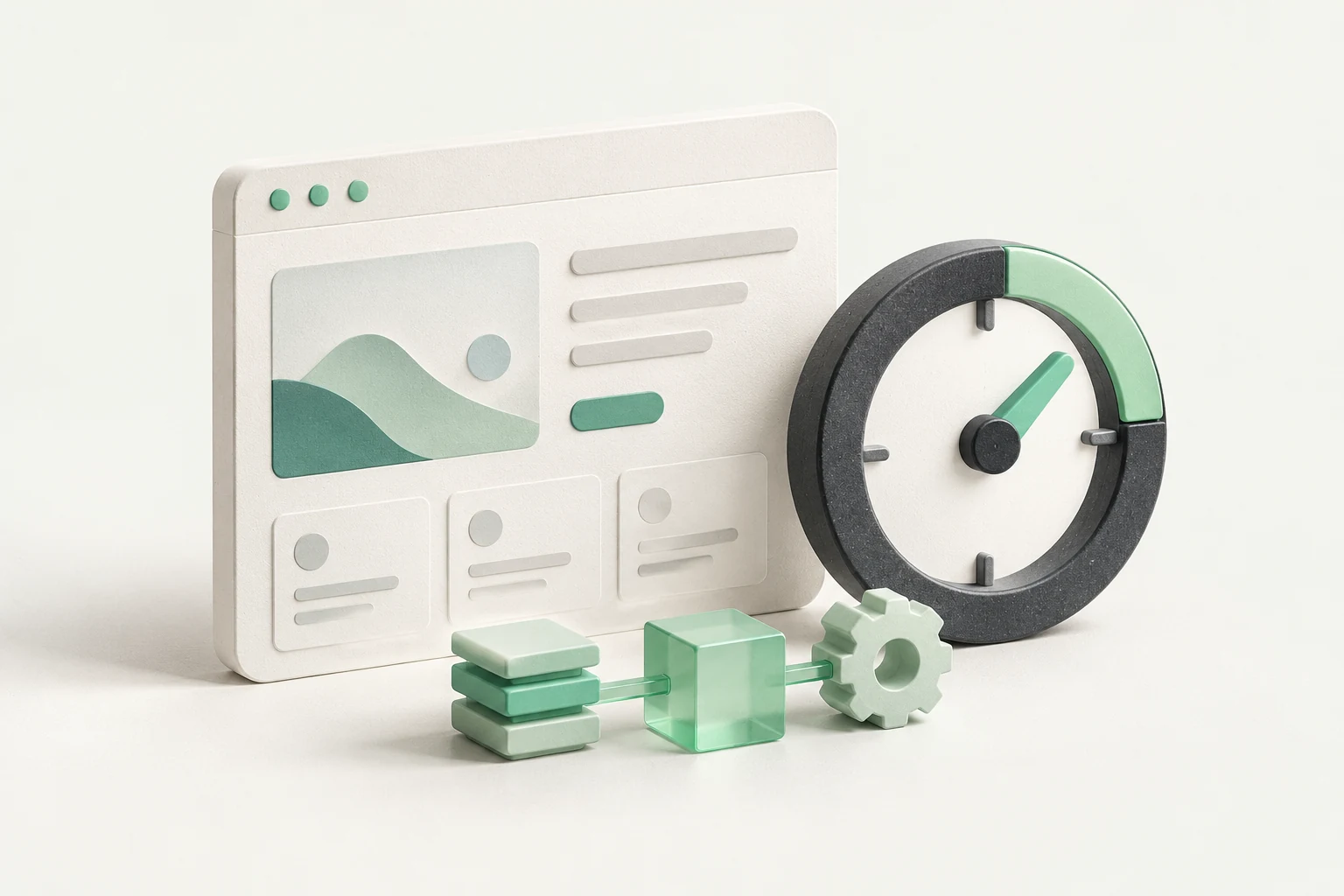
Have you ever visited a website that takes too long to load? Has it frustrated you so much that you ended up leaving? Most people do not have the patience to wait for a website to load. Website speed is crucial and can significantly affect the user experience and conversion rate. That is why it is important to understand WPO and how it can help improve your website’s quality and speed.
What is WPO?
WPO stands for Web Performance Optimisation. It is a practice that aims to improve a web page’s loading speed and the user experience. In other words, it is about making a web page faster and easier for the user to use.
Why is WPO important?
Optimising your website’s performance is essential to improving its quality and speed. WPO offers numerous advantages, such as a more pleasant experience for visitors, faster loading times and higher conversion rates. Slow response times can drive customers away and increase the bounce rate, which can be disastrous for search engine rankings. By implementing WPO solutions, you can dramatically improve your website’s performance, contributing to a better user experience and better business results.
Your website’s speed depends on various components, such as the size of your images and your server’s capacity. Applying WPO tactics, such as file compression and image optimisation, can help reduce the load on your website and make it run more efficiently. A faster website can also lead to better search engine rankings, which in turn attract more traffic and a higher return on investment. By focusing on your website’s loading time and performance, you can improve the user experience and increase the potential for conversion and retention.
Website speed is important for several reasons:
User experience
Users expect websites to load quickly. If a web page takes too long to load, the user is likely to leave the website and look for another option. This means that poor loading speed can have a significant impact on the user experience.
Conversion rate
Website speed can also affect the conversion rate. If a website takes too long to load, users are less likely to complete a purchase or fill in a contact form.
SEO
Website speed is also an important factor in SEO. Google has indicated that website speed is an important factor in search rankings. A faster website can improve search rankings and therefore increase online visibility.
How does WPO work?
WPO involves a series of techniques used to optimise website speed and performance. Some of these techniques include:
Image optimisation
Images are an important part of many websites. However, high-resolution images can slow down website loading. Image optimisation involves reducing image file sizes without compromising image quality.
Code optimisation
Website code can also affect loading speed. Code optimisation involves reducing the size of HTML, CSS and JavaScript files.
Caching
Caching involves storing some web page elements in a cache so that they do not have to be loaded again each time the user accesses the page. This can significantly improve loading speed.
File minification
File minification involves reducing file sizes by removing unnecessary whitespace and comments.
Three layers to review for performance
Assets
Images, video, fonts and appropriate sizes.
Code
Scripts and components used by the page.
Delivery
Server, caching and how files are served.
How can WPO improve your website’s quality and speed?
To succeed in the digital world, it is essential to improve your web page’s quality and speed. WPO techniques are an effective way to do this, so what advantages do they offer? To begin with, they can lead to better rankings in search engine results, increasing your website’s visibility and potential visitor numbers.
Secondly, they can also increase the likelihood of user retention and conversion. When people have a positive experience on your web page, they are more likely to stay and explore, or even make purchases. By optimising performance, you can reduce the likelihood of users leaving because of a slow page or other technical problems.
Thirdly, WPO strategies can generate a higher return on investment. Reducing page loading time and bounce rates will encourage more visitors to stay on your website. This can increase the chances of converting these visitors into customers.
WPO can also improve the overall browsing experience. By optimising page speed and eliminating delays in multimedia content, users can enjoy smoother, faster browsing. This can lead to greater satisfaction with your website and potential word-of-mouth recommendations.
WPO can significantly improve your website’s quality and speed. Some of the benefits include:
Improves the user experience
A faster, easier-to-use web page can significantly improve the user experience. This can lead to a higher conversion rate and therefore greater online success.
Increases online visibility
A faster web page optimised for SEO can improve search rankings. This can increase online visibility and attract more traffic to your website.
Reduces website abandonment
A faster web page reduces the likelihood of users leaving the website because of slow loading. This means that users are more likely to stay on your website and complete a desired action, such as buying a product or filling in a contact form.
Improves online reputation
A faster, easier-to-use web page can also improve your brand’s online reputation. Users are more likely to have a positive impression of your brand if they have a positive user experience on your website.
Conclusion
WPO is an important practice that can significantly improve your website’s quality and speed. Website speed is a key factor in improving the user experience, conversion rate and SEO. Using WPO techniques, such as image optimisation, caching and file minification, can significantly improve loading speed and the user experience on your website.
Frequently asked questions
Does WPO require a new design?
Not always. Changes to images, code or file delivery may preserve the existing design. If heavy or unnecessary elements cause the problem, their presentation may also need attention.
Is optimising the homepage enough?
Not if visitors enter through other pages. Check services, articles, product pages and forms according to important customer journeys. Improvements to shared templates may benefit several pages.
Is optimisation a one-off task?
New images, features and integrations can change performance. After the initial work, check significant changes and maintain publishing practices that avoid reintroducing the same problems.