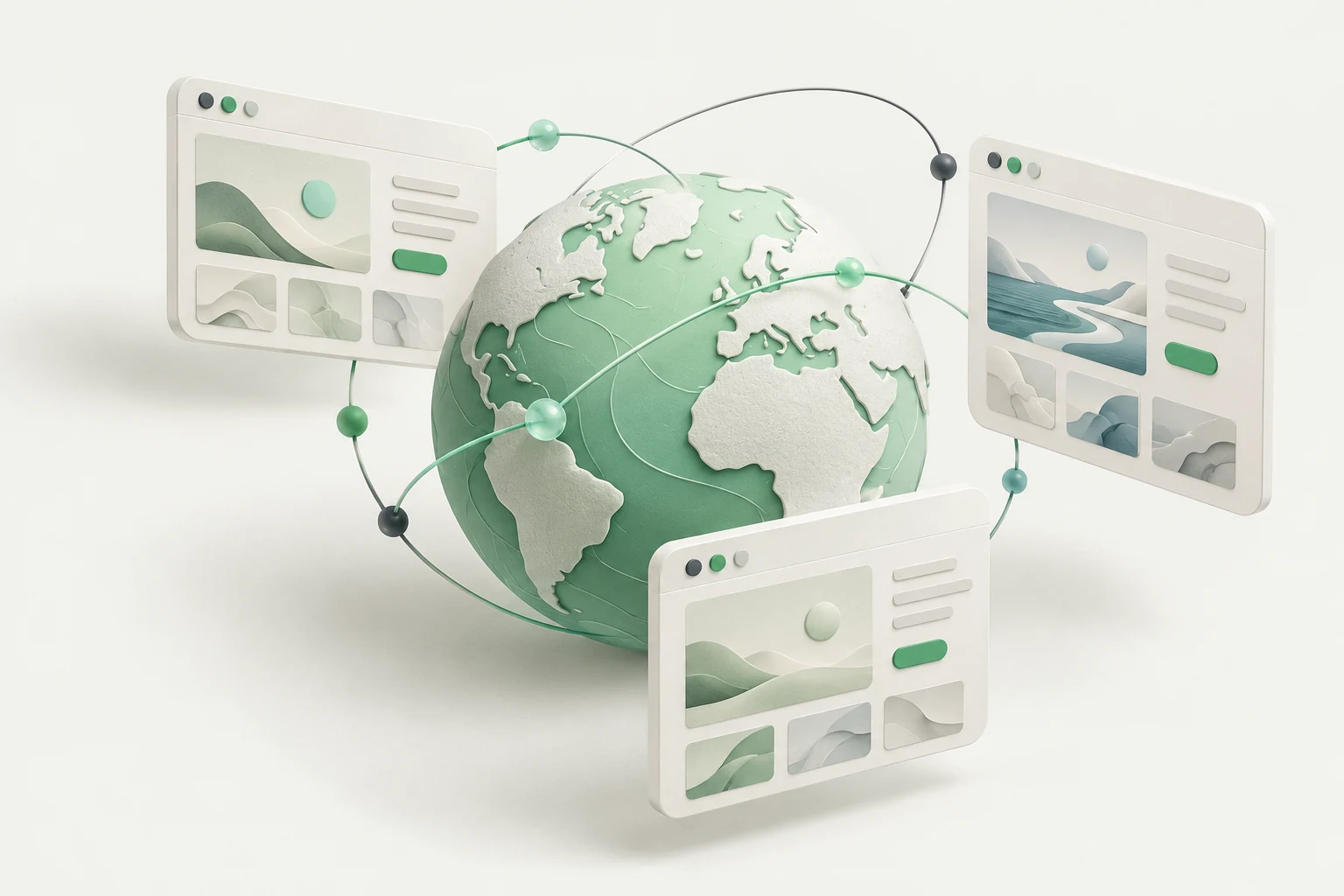
Do you want to expand your business and reach a global audience? One of the most effective ways to do this is to internationalise your website. However, it is not enough to translate your website into different languages. To truly connect with your target audience in different countries, you need to adapt your content, optimise for international SEO and design for the local market. You also need to consider certain technical aspects to ensure your website’s internationalisation succeeds. In this complete guide to internationalising your website, we will provide everything you need to know to take your business global. From developing an international SEO strategy to optimising web pages by geographical location, we have you covered. Let’s start reaching a global audience!
Adapt your content to the country and market objectives
Depending on the sector or type of business, you may not need to personalise your content, but generally, to successfully reach a global market, it is essential to personalise your content according to the country and your objectives. This means taking into account cultural differences and the preferences of your target demographic. For example, social media use may be more widespread in certain territories than in others, so it is essential to adapt your approach accordingly. If you take time to understand your target market’s individual needs and tastes, you can create content that resonates with them on a deeper level and ultimately leads to conversions.
An important area for content adaptation is product and service descriptions and landing pages. These pages should reflect your audience’s native language, currency and customs. It is also important to take into account the needs and specific preferences of each market when developing these pages. For example, in some countries, customers may place greater emphasis on customer service, so it is important to highlight this aspect of your website. By personalising your product and service descriptions on your website, you can create a more tailored user experience that speaks to your target audience.
For a large brand, gaining international recognition can be a relatively straightforward task. But for smaller brands, getting noticed can be difficult. To make sure you are visible, formulating an effective international strategy is another essential component of adapting your content to different countries and markets. This involves optimising your page according to geographical location and using local keywords. By focusing on these key areas, you can increase your website’s visibility in different markets and drive more targeted traffic to your page. It is also important to regionalise your content and other multimedia material to ensure it is accessible and engaging for your global audience. By fine-tuning your content and strategy, you can successfully expand your reach and attract a worldwide audience.
Take cultural differences into account
Cultural considerations, such as language, colour, design and images, should always be kept in mind when creating an international website to ensure success.
When creating an international website, it is essential to take cultural differences into account to avoid misunderstandings and alienating visitors. Language, design, colour and images must be considered so that the website fits each user’s culture. By properly considering each user’s culture, the website can ensure an experience tailored to its visitors. This includes using visual elements, such as images, and adapting navigation and user interface design to the country’s language. These measures can improve the user experience, foster intercultural understanding and ensure the success of an international website.
Translation quality
When it comes to online communication, using the right tools for the job is essential for success. When creating web content for a project, it is important to remember that an online translator is not enough. Instead, hiring a translator or a professional editor with knowledge of the native language and culture can help ensure the written content is accurate, culturally relevant and appropriate for its intended audience. The experience of a team of specialists is the best way to ensure your next web project can gain a competitive advantage. With the right resources, you will have a greater chance of success.
Graphic design for your target audience
Creating a design that appeals to a global audience requires an understanding of the nuances of the target audience’s aesthetic preferences. Taking time to research cultural differences and feedback from the intended viewers is essential to creating a design that resonates with them. From colour choices to typography, every aspect should be adapted to the audience to maximise engagement and conversions.
It is important to consider the visual sensibilities of different nations and cultures when designing for an international audience. For example, Americans may prefer bright tones and bold typefaces, while Japanese audiences may appreciate a more muted colour scheme and minimalist design. To make sure your design hits the mark, you need to conduct thorough research and gather feedback from your target audience.
Accessibility and optimisation for all users must also be considered. This includes optimising loading times, adapting multimedia elements such as images and incorporating features for users with disabilities (accessibility). By creating a design that is both visually appealing and highly functional, your website will be able to reach more people and potentially rank better in search engine results.
In conclusion, graphic design for an international audience requires consideration of the target audience’s cultural nuances and sensibilities. By conducting thorough research and creating a design tailored to their preferences, you can increase your website’s appeal and prepare it for success in the global market. Paying attention to keywords and ensuring the design is accessible and optimised for all users is also essential to achieving this goal.
Developing an international SEO strategy
To begin your global marketing journey, you need to understand your target market in depth. This includes researching your potential buyers’ search behaviour, language preferences and cultural nuances. Knowing these details will allow you to create content that resonates with your audience and drives traffic to your website.
Once you have identified your buyer persona, you need to make sure your website is optimised to reach the right people. This includes creating country-specific landing pages, using the local language and currency, and using hreflang tags to tell search engines which version of your website to show. Your website should also be responsive and load quickly to rank highly in search engine results.
Finally, it is important to bear in mind that search engine algorithms for search and user behaviour can vary by country. You should therefore keep up with the latest market trends and adjust your strategy accordingly if necessary. This will ensure your website is seen by a global audience and achieves good results in search engine rankings.
Adapting a website for another market
Market
The needs and context of your intended audience.
Content
Appropriate messages, examples and vocabulary.
Structure
Consistent routes and navigation across languages.
Optimising websites for international SEO
For businesses looking to expand their reach to a global audience, it is important to adapt their web pages to the needs of different countries and markets. This requires not only adapting content and product and service descriptions on landing pages, but also a more technical approach. This includes optimising web pages by geographical location, applying geotargeting techniques and localising videos and other multimedia content. Developing an international SEO strategy that takes each target market’s search habits into account is also essential to increasing visibility in Google and other search engine adverts and attracting new customers from around the world.
Optimising websites for worldwide success involves more than adjusting content; it requires a comprehensive plan. This begins with making the website accessible to users in every corner of the planet through geotargeting and hreflang tags. It also means making website navigation easy and intuitive, regardless of the visitor’s language or location. Finally, developing a strategy that takes different countries’ unique search habits into account is paramount to ensuring visibility in Google and other search engine adverts.
By taking these measures, businesses can expand their reach and customer base beyond their borders.
Technical aspects for a well-functioning international website.
With growing opportunities and global connectivity in today’s increasingly digital world, the need for CDNs has never been greater. A CDN (content delivery network) is a group of servers that store website content and deliver it to users. CDNs help improve website performance and ensure websites load quickly. CDNs also help prevent website content from becoming unavailable because of server failures. In addition, CDNs can help reduce loading times and improve the experience of website users around the world. For these reasons, CDNs are essential for any website with global ambitions.
Your hosting server’s cache is fundamental to its operation and performance. A cache is essential for websites and applications to load quickly and efficiently. It stores previous and frequently accessed information, meaning website users will experience a faster loading time and less network traffic. In most cases, the cache is located on the hosting server’s hard drive. However, some providers may also separate the cache from the main file system to provide greater security. When selecting a hosting provider, it is important to understand what type of cache is used and where it is located.
Failing to do so could degrade performance and harm the user experience. Hosting without these technical requirements is not suitable for international web development.
To conclude
Reaching a global audience through an internationalised website is crucial for businesses looking to expand their reach and increase revenue. Adapting content, optimising for SEO and localising design elements are just some of the key aspects to consider when creating a website for different countries. Together with the necessary web server technical requirements, suitable hosting will make our work much easier.
Based on this guide, at Awebcado we guarantee that businesses can ensure their website is accessible and appealing to audiences around the world. With the right approach and tools, creating a website tailored to the international market can be a valuable investment for any business looking to succeed in a global market.
Frequently asked questions
Is translating the copy enough?
Translation is only part of the work. Review available services, references, contact options and the terms each audience uses. Linguistically correct copy may still fail to address its intended market.
Must I launch every language at once?
Not necessarily. Prioritise markets you can serve, provided each published version has sufficient content, consistent navigation and working contact options. Avoid offering a language that leads to unfinished pages.
What happens when I change a service in one language?
Review its other language versions and update the equivalent information. A page inventory and clear translation responsibilities help prevent conflicting prices, features or contact details.